Weekend Notebook #2602 – Retail, FMCG / CPG & Ecommerce Highlights from CES 2026

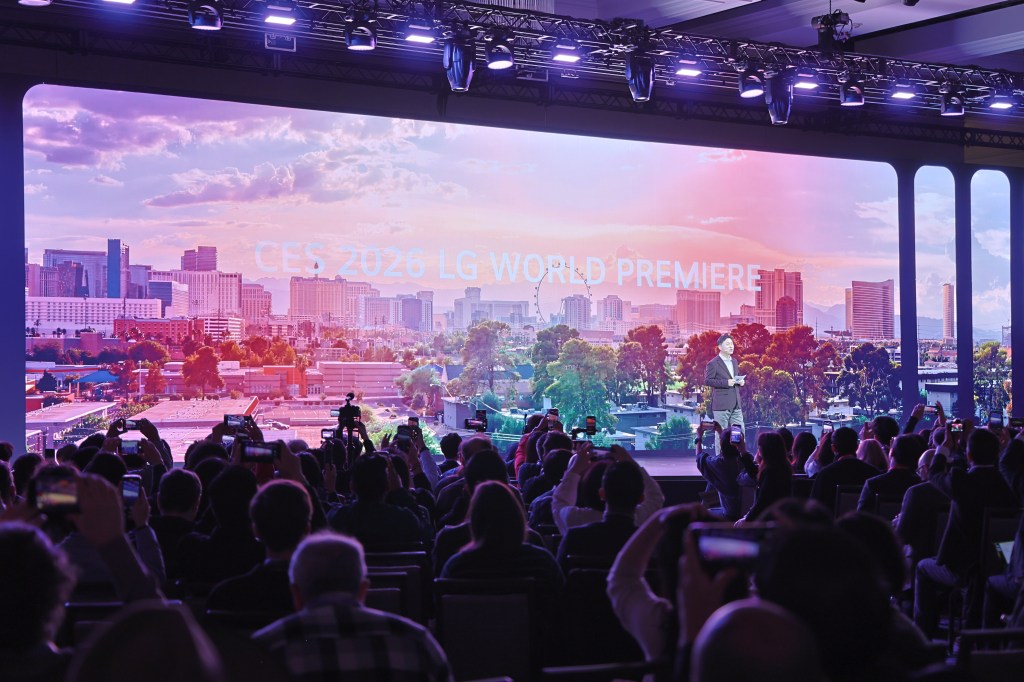
CES 2026 – Photo credit the Consumer Technology Association (CTA)

Published on LinkedIn and amitabhapte.com on11th Jan 2026

CES used to showcase device & gadget-based innovation. The signal this year from CES 2026 was about industrialization of intelligence across the FMCG supply chain. Homes and stores are becoming computational environments where the ‘shopper’ is increasingly an algorithm, not a human eyes-on-glass participant. If you’re a CIO or Tech Leader in CPG / FMCG or retail, the challenge isn’t the hardware on the floor, it’s how you show up in a world where the consumer operating model has moved from discovery to delegation.

Four CES 2026 signals that matter, if you are in a CPG, FMCG, Retail or Ecommerce business. None of these are optional, they compound.

1. Agentic commerce: the invisible shelf

We’ve moved from chatbots to agents that transact. Increasingly, the “shopper” is an algorithm acting on constraints, not a human browsing a shelf.

Google is sketching a future where personal agents negotiate directly with merchant systems on inventory, price and fulfilment early patterns of “consumer‑to‑merchant” protocols rather than static product pages. Instacart is building on its OpenAI‑powered experiences to offer conversational journeys that move from recipe discovery straight to cart fulfilment. Amazon’s “Buy for Me” now allows an AI agent to complete purchases on third‑party brand sites from within the Amazon app, turning intent into transaction with minimal user friction. Rufus, Amazon’s AI shopping assistant, already summarises reviews and compares products and categories with judgment, compressing the classic research journey into a single conversational flow.

Why it matters – Discovery shifts from search placement to context, constraints and routines. Metadata, APIs and consent models now determine brand visibility more than end‑cap positioning or SEO.

2. Physical AI: from demos to throughput

Robotics at CES 2026 showed a clear shift from demos to economics. Walmart’s AI “super agent” framework and its use of AI for defect detection, routing and pallet optimization in distribution centres are now reference points for AI‑first supply chains, even when discussed beyond a single event. LG unveiled the CLOiD Home Robot at CES 2026, a multi‑purpose home assistant with articulated arms and fingers designed to handle everyday household tasks as part of its “Zero Labor Home” vision. In logistics, robotics companies such as Pickle Robotics, working with carriers like UPS, are demonstrating how AI‑powered robots can unload irregular freight at high speed, a direct signal for how mixed CPG loads will be handled in future yards.

Why it matters – Robotics is becoming a strategic hedge against labour volatility and demand spikes. The measure of success has shifted from novelty to throughput, shrink reduction, safety, and OTIF performance.

3. Precision FMCG & beauty tech: products become systems

Consumables are evolving into hardware‑software ecosystems, especially in beauty and wellness.

L’Oréal continued its CES beauty‑tech run with infrared‑enhanced hair styling tools and flexible LED‑based anti‑aging wearables that blur the line between device, formulation and service. Kolmar Korea’s “Scar Beauty Device” won a CES 2026 Best of Innovation Award in Beauty Tech, combining AI‑based scar analysis with precision piezo‑electric delivery and around 180 blended colors for hyper‑personalised concealment and treatment in one system. LG Household & Health Care’s ultra‑thin “Hyper Rejuvenating Eye Patch,” a flexible LED eye patch paired with AI‑driven skin diagnosis and personalised ingredient prescription, shows how even a patch can become a dynamic, data‑driven.

Why it matters – Products no longer end at purchase; they evolve through data, diagnostics and software updates. CIOs and Tech Leaders in CPG / FMCG are now part of product, ethics and lifecycle design, not just “back‑office IT.”

4. Smart retail operations: stores as computers

The store is becoming a sensing, learning system. Samsung’s latest Micro LED and transparent display concepts at CES 2026 were framed as intelligent, context‑aware surfaces, equally applicable to flagship stores, QSR menus and in‑home experiences. Freestyle‑style beverage platforms from players like Coca‑Cola’s dispenser and app telemetry provides a template for how retail and vending data loop back into R&D. These patterns signal stores that behave more like software: instrumented, testable and continuously updated

Why it matters – The feedback loop from consumption to R&D is collapsing. Retail data is no longer just marketing input; it is product strategy and portfolio design.

Closing takeaway

CES 2026 made one thing clear. Intelligence is no longer a layer on top of FMCG and retail operations. It is becoming the operating system. Shopping is moving from discovery to delegation. Products are evolving after purchase. Stores, homes, and supply chains are becoming computational environments that sense, decide, and act.

For CIOs and tech leaders in CPG, FMCG, retail, and e-commerce, the advantage will not come from adopting more technology. It will come from designing brands, data, and operations that are readable by agents, executable by machines, and continuously improved by feedback.

The future shelf is already invisible. The only question is how your brand shows up on it.

Weekend Notebook #2601 – Scale vs. Substance

Published on LinkedIn and amitabhapte.com on4th Jan 2026

As we enter 2026, the AI industry remains gripped by what feels like scale fever. The prevailing assumption is that enough capital, energy, and hardware will eventually resolve into utility. The pipes are being laid at extraordinary speed. The open question is whether repeatable business value will follow.

The $40 Billion “More” – The scale of investment is now detached from traditional venture logic. Masayoshi Son has fully funded SoftBank’s $40 billion investment into OpenAI. This forms the down payment for Stargate, the hyperscale data-centre joint venture with Oracle. What’s notable is not just the size, but the intent. This is infrastructure being built ahead of clearly defined workloads. In my experience, one pattern holds. Infrastructure only creates value when it attracts the right tenants. We are, in effect, constructing the most expensive library in history. The job of leadership is not to admire the architecture, but to ensure the books are being checked out. And that they move the P&L.

The Efficiency Pivot – While the West continues to scale outward, parts of the East are scaling inward. DeepSeek is promoting training approaches that prioritise efficiency over brute force, aiming to stay competitive despite chip constraints. This isn’t a novelty. It’s a reminder that optimisation has always been a counterweight to abundance. For organisations operating with finite compute budgets, this matters. The strategic question is shifting. Not how many GPUs we can acquire, but how effectively we can utilise what we already have. Software-level optimisation is becoming as important as hardware procurement. The era of “buy more” is giving way to “use better”.

The Platform Mirage – OpenAI is experimenting with embedding third-party services directly into ChatGPT, allowing users to interact with tools like Spotify or Zillow through a single conversational interface. The ambition is clear. Replace the mobile grid with a universal text box. In practice, most of these integrations function as lightweight connectors. They struggle to match the speed, clarity, and precision of dedicated interfaces. This pattern isn’t new. The 2016 chatbot wave promised similar consolidation and quietly receded for the same reason. For complex enterprise tasks, purposeful graphical interfaces remain faster than conversation. Chat is powerful for intent discovery and orchestration. It is rarely the most efficient execution layer.

Resilience as a Requirement – Value is increasingly concentrating in specialised infrastructure and operational plumbing. Octopus Energy is spinning out Kraken, its AI-driven utility operating system, at an $8.65 billion valuation. At the same time, governments are hardening their positions. India is investing $4.6 billion in local component manufacturing while issuing strict compliance mandates on AI platforms. These signals point to the same conclusion. Resilience is no longer a secondary consideration. Regionalised supply chains, local compliance, and operational sovereignty are becoming baseline requirements. They are not inefficiencies to be minimised. They are the cost of continuity in a fragmented world.

My mindshare beyond Tech: the digital detox paradox – One of the most popular resolutions for 2026 is not a new app but deleting them. The Wall Street Journal reports a surge in digital detoxing, driven by growing recognition that constant notification cycles erode focus rather than enhance productivity. The irony is structural. At the same moment we are investing billions in agentic systems designed to capture attention, users are reclaiming time away from screens. As a CIO, my responsibility is to ensure systems are always on. As a leader, I know that the best thinking often happens when people are not. High-performance cultures depend on deep work. And deep work is the first casualty of the notification bell.

Weekend Notebook #52 – Enterprise AI grows up and narrative still matters

Published on LinkedIn and amitabhapte.com on 28th Dec 2025


This week in AI – The State of Enterprise AI, 2025

The State of Enterprise AI 2025 from OpenAI report offers a timely and necessary reality check.

AI adoption is no longer the challenge. Delivering consistent, repeatable business impact is.

Most large organisations now deploy AI across multiple functions. Yet only a minority report meaningful value at scale. The gap between experimentation and transformation remains stubbornly wide.

Three signals from the report stand out.

1. AI is now a leadership mandate.
AI has moved firmly onto board and executive agendas. The conversation has shifted from “Should we adopt AI?” to “Why aren’t we scaling it faster?”. This pressure is cascading rapidly through organisations, often faster than operating models, skills, and governance structures can adapt.

2. Pilots are plentiful. Scale is rare.
Enterprises are running many AI initiatives, but few are embedded into core workflows. The barriers are not model capability. They are data quality, integration complexity, unclear ownership, skills gaps, and organisational inertia. In short, enterprise readiness, not technology, is the limiting factor.

3. Focus determines value.
Companies seeing returns are selective. They prioritise a small number of high-impact use cases, redesign processes end to end, and invest deliberately in governance, skills, and change management. AI succeeds when it becomes part of how work gets done, not when it is layered on top of existing processes.

One pattern is unmistakable. AI investment is rising sharply, but productivity gains are not rising at the same pace. That gap defines the current phase of enterprise AI.


My takeaway this weekend

Enterprise AI has entered its execution phase. This is no longer about experimentation or tooling. It is about operating discipline, clear decision rights, and cultural adoption.

The organisations that win will be those that industrialise AI with the same rigour they apply to finance, supply chain, or manufacturing. AI advantage will be built through focus, integration, and sustained leadership attention, not through volume of pilots.


Beyond AI: my mindshare – Great TV Endures

As the holiday period starts, the Times 100 Best TV Shows of 2025 makes for a good read. A few personal favourites made the list, including Netflix’s Adolescence, Apple TV’s Slow Horses, and the BBC’s The Celebrity Traitors. What have you been watching this year?

Weekend Notebook #51 – when AI stops advising and starts acting

Published on LinkedIn and amitabhapte.com on21st Dec 2025


This week in AI – from Intelligence to Agency

Something subtle but decisive shifted this week.

Not in capability.
Not in valuation.
But in intent.

Across security, payments, software creation, and capital allocation, AI is no longer being positioned as a decision-support layer. It’s being designed as an execution layer.

That distinction changes everything.

For years, AI sat comfortably in the advisory role. It analysed. It recommended. It optimised. Humans still pulled the final lever. That boundary is now eroding, not through a single breakthrough, but through quiet, cumulative design choices.

Consider cybersecurity. Google Cloud’s expanded partnership with Palo Alto Networks is not just a large services deal. It reflects a deeper truth. In an AI-shaped threat landscape, human-in-the-loop defence is too slow. Security systems are being rebuilt to detect, decide, and respond autonomously. Defence is becoming algorithmic by necessity, not ambition.

The same shift is visible in commerce. Visa’s AI agents completing real consumer purchases may sound incremental, but it marks a psychological crossing. When AI systems transact on our behalf, trust is no longer abstract. It’s operational. The question stops being “is this recommendation accurate?” and becomes “am I willing to let this system act for me?”

That leap from suggestion to execution is irreversible.

Capital markets are aligning to the same logic. SoftBank’s scramble to close the final tranche of its OpenAI commitment is not about hype or fear of missing out. It’s about securing influence over platforms that will increasingly do, not merely advise. Lightspeed’s $9 billion fund, alongside similar mega-raises, reflects the same recalibration. AI companies are no longer lightweight software plays. They are infrastructure operators, with execution risk, physical constraints, and balance sheets to match.

Even software creation itself is being reframed. Nvidia and Alphabet backing Lovable is not just about no-code tools. It’s about collapsing intent into output. When natural language becomes a production interface, creation shifts from specialised craft to conversational control. The bottleneck moves from technical skill to clarity of thought.

Across all of this, one pattern holds.

AI is migrating from intelligence to agency.
From knowing to doing.
From tools we consult to systems we delegate to.

And that is not a technical evolution. It is a leadership one.


My takeaway this weekend

We are crossing the line from assisted intelligence to delegated authority.

That transition is happening faster than most organisations realise, and far faster than governance, culture, or leadership muscle memory can absorb. AI systems are beginning to act inside workflows, markets, and creative pipelines that were designed for human accountability.

The risk is not runaway intelligence.
It’s misplaced trust.

The leaders who will navigate this next phase successfully won’t be the ones chasing the most autonomy, but the ones redesigning decision rights, escalation paths, and responsibility models for a world where machines execute at machine speed.

AI leadership is no longer about adoption.

It’s about delegation, and knowing exactly where not to delegate.


Beyond AI: my mindshare – The World Meditation Day

Today, on World Meditation Day, the contrast couldn’t be sharper.

We are building systems that move faster, decide quicker, and act without hesitation. At the same time, the human nervous system is struggling to keep pace. Cognitive overload is becoming the hidden tax of digital acceleration.

Meditation feels almost countercultural in this context, but that’s precisely the point.

With over 700 studies linking meditation to focus, emotional regulation, and resilience, it’s no longer a spiritual indulgence. It’s a leadership capability. In environments where decisions are increasingly automated, clarity of intent becomes the scarcest resource.

Stillness trains that clarity.

As AI systems take on more execution, the human role shifts upward, toward judgement, ethics, and meaning. Those are not skills we can rush or automate. They require space. Attention. Presence.

This isn’t about slowing progress.
It’s about strengthening the human core that guides it.

In an age of delegation, inner discipline becomes the final guardrail.

Weekend Notebook #46 – Gartner IT Symposium Special Edition

Published on LinkedIn and amitabhapte.com on16th Nov, 2025


This week in AI – Five AI Signals from Barcelona

Barcelona had a different energy this year. The conversation has moved on from what AI can do. That phase is over. The focus now is on how organisations absorb the speed, scale, and structural change AI is introducing.

Across the keynotes, roundtables, and research sessions, five themes kept surfacing, sometimes quietly, sometimes unmistakably.

Theme One: The widening transformation gap.
Some organisations have begun treating AI as infrastructure, with governance, data foundations, ownership, and responsible deployment embedded into normal operations. Others remain stuck in pilot mode, experiments that never scale, uneven adoption, unclear accountability, and a general hesitancy to move. As one analyst put it: AI capability is rising fast, but organisational readiness is not. That tension is now shaping the competitive landscape.

Theme Two: The rise of agentic architecture.
By 2028, most B2B buying will be mediated by AI agents, and most customer processes will be handled by multiagent systems. This is not workflow automation. It is workflow replacement. Processes that once followed structured steps are becoming dynamic, context-aware, and decision-driven. Interfaces are shifting toward conversations. Enterprise platforms, from ERP to CRM, are reorganising around intelligence that acts, not waits.

Theme Three: Governance as the new accelerator.
Not in the traditional compliance sense. Governance has become the mechanism that determines speed. The organisations moving fastest weren’t the ones with the most models; they were the ones with clean data, disciplined model management, strong provenance, clear policies, and embedded risk thinking. In a world shaped by evolving regulation, geopolitical pressure, and rising expectations of trust, governance is no longer the brake, it is the runway.

Theme Four: Real value from AI.
This was the moment the conversations got honest. Leaders are discovering that “time saved” does not equal “value created”. Productivity gains are only the beginning. Real value emerges when organisations reengineer processes, redesign decision flows, renegotiate outsourcing, adopt hybrid human–agent operating models, and build AI-native products and services. The organisations making genuine progress are not adding more AI, they are rethinking how the enterprise works.

Theme Five: The shift in leadership expectations.
Technology leadership is expanding from delivery to direction. CIOs, CDOs, and emerging CAIOs are increasingly expected to influence beyond their function, connecting strategy, architecture, operating models, and transformation; converting AI potential into outcomes; and aligning people and processes around new ways of working. Influence, not technical mastery, is becoming the real differentiator.

My takeaway from the weekend

“The next chapter of AI will not be won by those with the most initiatives. It will be won by those with the most coherent organisational design, the strongest architecture, the clearest governance, and the most aligned leadership.”


Beyond AI: my mindshare – Four Human Lessons from Barcelona

Ironically, the most impactful sessions had nothing to do with technology. Four speakers; Bear Grylls, Jo Malone, Chris Barton, and Charles Duhigg, offered a blueprint for the human side of transformation, which felt even more relevant amid all the agent diagrams and architecture slides.

Bear Grylls spoke about resilience. Fear is normal. Vulnerability builds trust. Pressure creates capability. And isolation, not danger, is what truly undermines performance. In a world where leaders face ambiguous AI decisions daily, his message felt practical and grounding.

Jo Malone spoke about instinct. Her philosophy was disarmingly simple: notice what others overlook, trust your senses before the data arrives, and treat simplicity as a form of intelligence. AI may amplify creativity, but instinct and taste continue to differentiate great work from average output.

Chris Barton, the founder of Shazam, spoke about perseverance. Shazam was considered impossible for years. Constraints became catalysts. A thousand small iterations produced a breakthrough. His message was clear: as AI automates the easy work, human advantage shifts to originality, first-principles thinking, and unreasonable persistence.

Charles Duhigg delivered a masterclass in communication. Great leaders, he argued, are “supercommunicators”, people who ask deeper questions, match the type of conversation others are having, loop back understanding, and create psychological safety. In an AI-powered world where information is abundant, but alignment is scarce, communication becomes a strategic asset.

“Together, these four voices reveal the traits organisations need most now: resilience, intuition, perseverance, and connection. These are the qualities that anchor teams through uncertainty and accelerate transformation. AI can amplify what we do, but only character determines what we become.”

Weekend Notebook #39 – When Capital Meets Compute

Published on LinkedIn, Substack and AmitabhApte.com on Sept 28, 2025


In spotlight this week: The $100 Billion Question

Nvidia is planning to pour $100 billion into OpenAI to build next-generation data centres, in what could become the most ambitious AI infrastructure bet ever. On paper, it’s a marriage of two giants: Nvidia supplies the silicon, OpenAI drives demand. The ambition signals nothing less than the industrialisation of AI.

But there’s a tension here. Much of this capital will circle back to Nvidia’s own chips, fuelling whispers of “closed-loop” deals that echo dot-com era excess. Analysts are already asking: are we funding productivity revolutions, or inflating another bubble?

The stakes couldn’t be higher. If this bet delivers, we could see an acceleration of AI capability at a planetary scale. If it falters, the correction could be sharp, reshaping both capital markets and public trust.

Walmart’s CEO Doug McMillon added a sobering perspective: headcount will stay flat even as business grows, because AI will take on roles that once required people. Coming from the world’s largest private employer, this isn’t abstract, it’s the front edge of a workforce reset that will ripple far beyond retail.

My take: We’ve entered the era where compute has become capital. AI is no longer just software; its steel, energy, land, and labour economics. Leaders must prepare for the dual challenge: harnessing unprecedented opportunity while cushioning society from unprecedented disruption.


Noteworthy this week: what caught my eye in the AI and tech world

I track the week’s big currents across leadership, geopolitics, policy, infrastructure, and people. Three themes stood out this week:

1. Cybersecurity: breaches are now brand events

  • Harrods confirmed a breach via a third-party vendor; customer names and contact details compromised. Another reminder that supply-chain risk is now brand risk.
  • JLR is recovering from a major September cyberattack that halted production and shipments. Global supply chains remain brittle, and resilience is now as important as efficiency.

2. Infrastructure – capital meets fragility

  • Beyond Nvidia’s $100bn, OpenAI also struck a $400bn partnership with Oracle and SoftBank, and tied up with Databricks to deepen enterprise adoption. Lofty projections of $125bn revenue by 2029 and “trillions” in future data-centre spend highlight both ambition and fragility.
  • Anthropic is tripling its workforce and expanding globally, with 80% of usage now outside the US. From pharma to finance to governments, we’re moving from AI pilots to enterprise-scale deployments. The AI arms race is now unmistakably global.

3. Policy & People – platforms redraw the line

  • Spotify removed 75 million low-quality AI-generated tracks. Platforms are drawing new lines between innovation and integrity. Protecting human creativity is now a business necessity.
  • Neon, an app that pays users to record calls for AI training, has triggered major privacy alarms. The trade-off between data, consent, and profit is becoming the next trust battleground.
  • Global talent shifts: Indian Global Capability Centres are no longer just back-offices; they’re producing CXOs for Tesco, Walmart, SAP, and Maersk. By 2030, an estimated 30,000 global leaders will emerge from this pipeline, a structural rebalancing of corporate power.

Beyond Tech & AI: my “mind share” this week

This week I tuned into Steven Bartlett’s Diary of a CEO podcast with Dr Pradip Jamnadas, a cardiologist known as “the fasting doctor.” is insights were striking: modern diets overload us with insulin spikes, while simple practices like intermittent fasting and better sleep can transform long-term health.

It’s a timely reminder that while AI scales our external capability, it’s disciplined self-care that sustains our inner resilience.


In summary: my key takeaway this weekend

“Capital is racing into compute. Leadership must race just as hard to scale responsibility

Weekend Notebook #37 – Every company is an AI company

Published on LinkedIn, Substack and AmitabhApte.com on Sept 14, 2025


In spotlight this week: Robinhood CEO recognises AI platform shift

We’ve stopped asking if companies will adopt AI. The question now is: how fast will they rewire themselves into AI companies?

Robinhood’s CEO recently declared just as every company became a “tech company,” every company will soon be an “AI company.” It’s a bold claim but history rhymes. The internet made digital storefronts mandatory, mobile turned every service into an app, and cloud redefined scale. AI now feels like the next inevitability. Much like a historic city that layers modern infrastructure onto its ancient streets, companies must preserve their rich heritage while rewiring pathways for an AI age. The old and new must coexist but progress demands bridges, not barricades.

The data confirms the shift. McKinsey’s 2025 survey shows 65% of companies already use AI in at least one function, BUT fewer than 25% have embedded it across multiple business processes. That widening gap between pilots and full-scale adoption mirrors past waves of disruption where only a few turned experiments into enduring competitive advantage.

The markets are voting with capital. Robinhood’s own leap into the S&P 500 is more than a headline. It signals that investors are rewarding not just vision but delivery moving from hype cycles to hard metrics of revenue, profit, and scale.

My PoV: AI is not a bolt-on feature. It’s becoming the new corporate nervous system, rewiring how decisions are made, how work gets done, and how value is created. The leaders who succeed won’t be those with the loudest AI press releases, but those who invest in new skills, governance, and customer trust while building resilience from the inside out.

“AI won’t just be a layer of software. It will be the fabric of how businesses compete, collaborate, and create value.”


Noteworthy this week: what caught my eye in the AI and tech world

The AI Economy – partnerships, infrastructure, and capital

Tech disruption – old giants, new bets

Society and culture adapting to tech

Market dynamics – winners and casualties


Beyond Tech & AI: my “mind share” this week

I tuned into a fascinating conversation between Jay Shetty and Deepak Chopra on AI and spirituality. Chopra reminded us that while artificial intelligence expands our external capabilities, it’s only sustainable if balanced with practices that expand our inner capacities, meditation, reflection, and self-awareness.

Technology sharpens our tools. But it’s human intelligence that shapes our purpose. My own Yoga practice reinforces this truth: clarity, calm, and resilience don’t come from faster chips or larger models they come from training the mind and body with the same discipline we apply to training algorithms.

In an AI-driven age, we need as much commitment to cultivating inner intelligence as we do to scaling artificial intelligence. That balance will determine whether innovation serves human flourishing or overwhelms it.


In summary: my key takeaway this weekend

Calling yourself an AI company is easy. Becoming one is costly, cultural, and continuous. The future of competition isn’t about adding AI as a feature, it’s about embedding it as the fabric of business itself.

Weekend Notebook #36 – The future of work: written in code, judged by people

Published on LinkedIn, Substack and AmitabhApte.com on Sept 7, 2025


In spotlight this week: When AI efficiency meets human cost

This week, AI showed us both sides of its coin: efficiency celebrated in boardrooms, uncertainty felt in households.

Salesforce announced it will cut around 4,000 jobs, the latest in a wave of Big Tech restructuring. At the same time Stanford study reinforces a point that many feared: AI adoption is already reducing jobs in predictable, routine, or entry-level tasks and creating fewer immediate opportunities for displaced workers.

One signal from industry, one from academia. Together, they tell a stark story: the AI dividend is real, but unevenly distributed. Enterprises capture productivity gains and shareholder value. Workers face uncertainty, communities disruption. AI isn’t just augmenting; it’s replacing, even in white-collar domains once thought safe.

For leaders, the message is clear: redesign jobs, not just reduce them. Reskill, rebuild ladders of opportunity, and maintain trust while pursuing efficiency. Cutting costs with AI may deliver short-term wins, but without reinvestment in people, it risks long-term fracture.

The companies that thrive won’t be those that simply shrink their payrolls; they’ll be those that create new paths for human potential.

“The future of work won’t be written by AI alone. It will be judged by how we choose to keep humans in the story.”


Noteworthy this week: what caught my eye in the AI and tech world

Robinhood and AppLovin to join S&P 500 – Robinhood’s inclusion signals fintech’s growing legitimacy. AppLovin’s 77% revenue growth and pivot to high-margin adtech position it as a rising AI-driven advertising force.

OpenAI $115B spending surge – Revised projections show nearly $80B more than expected by 2029, as OpenAI seeks control of its infrastructure. It’s bold, but aligned with megacap-level AI investment. My take: AI is no longer R&D, it’s industrial policy.

Anthropic’s $1.5B copyright settlement – The largest in U.S. history, resolving piracy of books from shadow libraries. The judge upheld training AI on copyrighted works as fair use, but the case highlights the urgent need to modernize copyright law for the AI age.

AI upends search advertising model – Ad spend in AI-driven search projected to jump from $1B in 2025 to $25.9B by 2029. From static keywords to multimodal, dimensional queries, this shift will redefine attribution, monetization, and competition in the AI-native web.

Google gets to keep Chrome – Found guilty of monopolistic practices in search, but allowed to retain Chrome and default search deals. Exclusive AI distribution contracts are banned, leaving Google free to double down on AI dominance.

India IT Inc worries on Tariffs – U.S. is weighing tariffs on Indian software exports, endangering a $283B industry reliant on U.S. clients. Combined with AI disruption, it’s a wake-up call: Indian IT must pivot from cost-based outsourcing to AI-led value creation.

OpenAI Job Platform – OpenAI plans to launch a certification program and job marketplace, aiming to train and certify 10M Americans by 2030. With Walmart as a partner, this is a direct challenge to LinkedIn, reshaping how people find and prepare for jobs in an AI-first economy.


Beyond Tech & AI: my music / media / sport “mind share” this week

The BBC Proms 2025 season is in full swing. Orchestral premieres, global folk fusions, and immersive film scores, something for everyone. My favourite this season? Anoushka Shankar’s “Chapters” performed with Robert Ames and London Contemporary Orchestra. A transcendent blend of Indian classical, electronica, and storytelling. Still available on BBC iPlayer. Don’t miss it.


In summary: my key takeaway this weekend

The accelerating march of AI is no longer a distant drumbeat it’s the rhythm reshaping our economy, work, and institutions in real time. From Salesforce’s job cuts to OpenAI’s $115B moonshot, the signals are clear: efficiency is prized, but empathy cannot be lost. Innovation without inclusion risks deepening divides.


“AI may be rewriting the rules but it’s up to us to decide who gets to stay in the game.”