
Published on LinkedIn and amitabhapte.com | 21st June 2026
Today is the summer solstice, the longest day of the year, and the 12th International Day of Yoga. This year’s theme is “Yoga for Healthy Ageing.” Apt, since most conversations about yoga still assume it is just a young person’s pursuit. It never was.
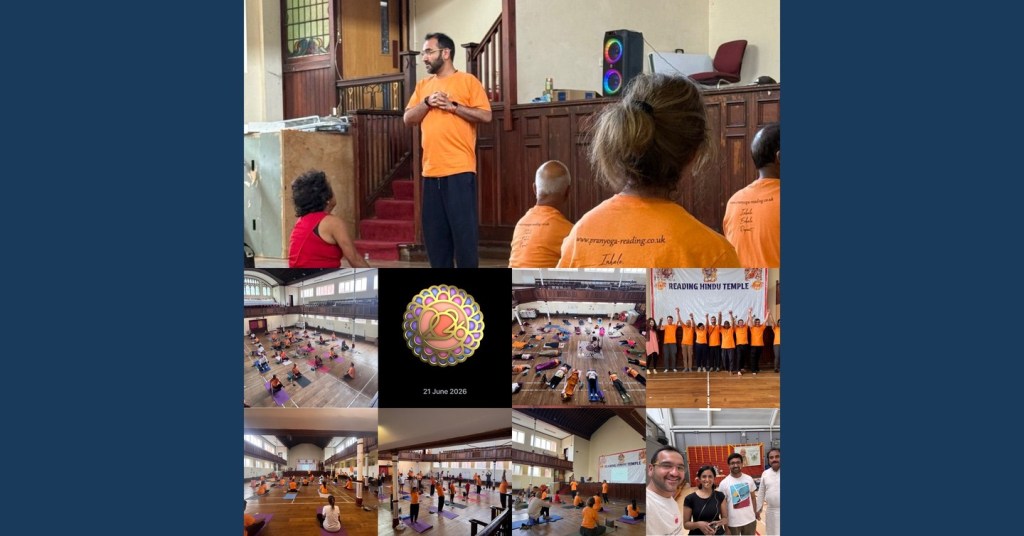
This weekend I contributed to Asana, Pranayama, and yoga-based meditation sessions at two community International Day of Yoga events, not just as a certified instructor but as a student who is still learning with fellow practitioners. Yoga is more than an ancient practice for me. It is a personal journey. This post is a celebration of that, and probably a few hundred thousand journeys similar to mine.
My Yoga Journey
Like many children growing up in India, I was taught yoga at school, woven into PE lessons as routine, not ritual. And like most of those classmates, it took a back seat the moment life got busy. University first. Then a career. Yoga simply did not survive the calendar.
I came back to it properly in my late thirties, not out of nostalgia but necessity. Responsibilities had grown. The pressure was different in kind. Conventional fitness, the gym, the occasional run, was not enough to help manage juggling priorities. I needed something that addressed the mind as directly as the body, and that is what brought me back to the mat.
In the years since, as responsibilities have continued to grow, the demands have shifted from physical stamina to something harder to train: clarity under pressure, energy across long days, and the ability to stay calm when a decision has no clean answer. A well-rounded yoga practice, physically invigorating asanas combined with energising pranayama and meditation-based mindfulness, has been my go-to for managing those demands.
What the Practice Actually Offers
The physical evidence is well documented. A Mayo Clinic Proceedings meta-analysis found yoga to be an effective lifestyle therapy for hypertension, with the strongest results when breathing and meditation were combined with postures. Harvard Health reports that yoga can lower the stress hormone cortisol after a single session, and that regular practice cultivates the body’s rest-and-digest response, the physiological opposite of the fight-or-flight state that chronic work stress keeps switched on.
The cognitive case is just as strong, and directly relevant to anyone at a desk all day. A 2024 study published in the Journal of Bodywork and Movement Therapies found that a six-month yoga programme improved executive function, working memory, and processing speed specifically in desk-based workers. Separately, Harvard Health notes that regular practitioners show a thicker cerebral cortex and hippocampus on brain imaging, the regions responsible for information processing and memory, and that these areas typically shrink with age but shrink less in long-term practitioners.
On stress specifically, a systematic review and meta-analysis in PMC confirmed that workplace yoga interventions measurably reduce perceived stress among employees compared with no intervention at all. The physical, cognitive, and stress-related benefits are not separate effects. They share the same underlying mechanism: better regulation of the body’s stress response.
Union as an Operating Model
The word “yoga” itself means union, the integration of mind, body, and breath into one coherent whole. It is worth sitting with that definition, because it scales far beyond the individual mat.
Teams fail less often from lack of skill and more often from lack of integration: strategy disconnected from execution, technology disconnected from the people who must adopt it, ambition disconnected from the pace at which trust actually builds. The yogic principle of union is, in essence, an organisational design principle. Bring the parts into a coherent relationship, and the whole becomes more capable than the sum of its pieces.
I see this directly in how cross-functional teams perform. The ones who pause to genuinely understand each other’s constraints before pushing for alignment move faster later, not slower. The discipline of presence, the same one I practise on the mat, shows up in how a leader listens in a steering meeting, how patiently they sit with disagreement before reaching for a decision, and how honestly they read the room before reading the deck.
My Takeaway This Weekend
Ancient wisdom and modern workplace practice are not in tension. “Union” describes what high-performing teams already do instinctively: integrate rather than fragment. Naming that principle, and practising it deliberately, is what turns it into a leadership discipline rather than a lucky team dynamic.
Yoga was part of my childhood, then it was not, and then I needed it again. That gap, and the return, taught me something the unbroken version of the story never could: the practice meets you where your life actually is. And the philosophy behind it, union over fragmentation, has quietly become one of the more useful frameworks I carry into how I lead and how I build teams.
None of this requires anyone to take up a mat. It simply asks a question worth sitting with: what would change in your team, your week, or your own head, if integration was the goal rather than an afterthought?
The views expressed in this post are my own and do not represent those of my employer.

