
Published on LinkedIn and amitabhapte.com on25th Jan 2026
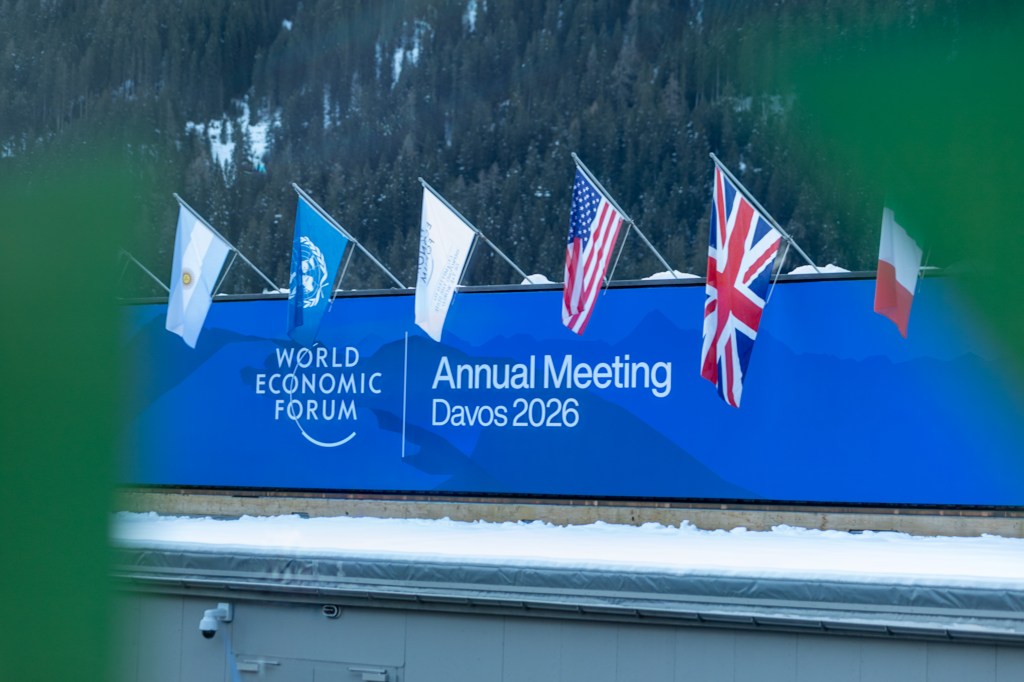
Every January, the world gathers in a Swiss ski resort to talk about the future. Often, that conversation lags reality by a few quarters.
Davos 2026 felt different. Two years ago, AI discussions revolved around existential risk. Last year, they fixated on generative possibility. This year, the mood shifted again. From magic to margins. From installation to deployment.
AI is no longer a side conversation at the World Economic Forum. It has become the organising logic for growth, energy, work, and geopolitics. And deployment, as every operator knows, is where things get complicated.
1. From demos to P&L
One of the clearest signals from Davos was how explicitly executives talked about money. OpenAI and Anthropic both framed 2026 as the year enterprise AI moves decisively into the core. OpenAI disclosed that the company is shifting from building AI tools to embedding them into how businesses actually run.
The conversation moved away from model benchmarks and toward return on invested capital. Financial services leaders pointed to underwriting and fraud detection. Manufacturers to predictive maintenance and yield optimisation. Healthcare executives to clinical workflow automation.
The implicit agreement was striking. AI has crossed the credibility threshold. The open question now is not whether it works, but where it delivers measurable payback, and how fast.
2. The capex reality check
This shift to P&L thinking exposed a deeper anxiety. AI deployment is proving capital-intensive at a scale few anticipated. Hyper-scalers are collectively spending hundreds of billions annually on data centres, chips, and networks. That spending was once absorbed comfortably by cash flows. At Davos, it was clear that boards are now scrutinising the economics more closely.
This wasn’t panic. It was operator realism. The question surfacing in private meetings was simple. Is this a temporary digestion phase, or the price of admission for the next decade of computing? The answer remains unresolved. What is clear is that deployment discipline is replacing experimentation exuberance.
This is the hangover phase. The technology works. Now, it must show it’s sustainable over a period.
3. The AI–energy equation moves centre stage
Nowhere was this more evident than in discussions on energy. Satya Nadella said energy costs will decide who wins the AI race. Access to cheap, clean, reliable power is becoming a strategic moat, not a sustainability footnote.
Sam Altman made similar observations on how AI’s progress depends on energy evolution. At Davos 2024, sustaining AI’s trajectory, he argued, ultimately depends on an energy breakthrough. Fusion, advanced nuclear, or radically cheaper renewables. Without it, the economics strain.
This reframed AI strategy entirely. Models and chips matter, but grids, land, cooling, and long-term power contracts now sit on the critical path. AI leadership has quietly become energy leadership. And that changes who wins.
4. From chatbots to agents, and beyond screens
On the product side, Davos revealed a growing impatience with the text box. After three years of marvelling that machines can converse, the demand is shifting to action. Agentic systems that can execute tasks across interfaces, applications, and environments.
Yet, the tone in Davos was notably pragmatic. Leaders acknowledged that this transition is less about model intelligence and more about unglamorous integration. APIs, standards, permissions, and human oversight. It feels less like a breakthrough moment and more like the web in the late 1990s. Everyone senses the inflection. No one has agreed on the standards yet.
At the same time, attention moved beyond screens to physical AI – robotics, automation, and autonomous systems are leaving labs and entering factories, warehouses, and cities. The emphasis was not spectacle, but supervision. Human-in-the-loop design and safe deployment dominated the discussion.
Intelligence is moving into the physical world. That raises the bar for trust.
5. Sovereign AI and the diffusion divide
Davos 2026 also made clear that AI is now a geopolitical asset. Panels framed AI as the next arena of statecraft. Less about ideology, more about who controls infrastructure, who captures economic upside, and who bears systemic risk.
The International Monetary Fund offered a sober warning. AI can lift global growth, but its infrastructure-heavy nature risks widening the gap between AI “haves” and “have-nots.” Unlike the internet, AI does not diffuse cheaply. Compute, energy, and talent concentrate advantage.
The implication for global business is significant, and unavoidable. We are moving from a world of open digital platforms to one of strategic national assets. AI infrastructure will be financed, regulated, and defended differently. And it will shape trade, alliances, and compliance for years to come.
6. Jobs, skills, and a fragile social contract
The jobs narrative matured as well. The tone shifted from “AI will kill jobs” to “AI will reshape future of work.” CEOs were notably candid, admitting that AI may sometimes be used to justify restructuring that was already inevitable.
What dominated instead was concern about transition. Reskilling at scale. Education systems that lag technological change. Policy experiments, including proposals to tax AI-driven productivity gains to fund workforce adaptation.
The consensus was not complacent optimism, but pragmatic urgency. The risk is not automation itself. It is unmanaged disruption.
7. AI as economic infrastructure
Perhaps the most telling Davos signal was how leaders described AI itself.
Demis Hassabis suggested the pathway to AGI is becoming clearer, sharpening the focus on safety and governance.
Jensen Huang described AI as foundational economic infrastructure, with impact determined not by who builds the smartest models, but by how widely intelligence is deployed across industries and regions.
This framing matters. Infrastructure is financed differently. Regulated differently. And built to last.
AI is no longer a feature. It is becoming part of the economic base layer.
My takeaway this weekend
Davos 2026 marked a turning point.
The magic trick has been performed. AI works. Now comes the harder phase. Building business models, power systems, skills pipelines, and governance frameworks that can sustain it.
The technical challenge is largely solved. The leadership challenge has only just begun.
The winners in this next phase will not be those who move fastest in isolation, but those who can integrate intelligence into economies and societies without eroding trust.
Davos wasn’t asking whether AI will shape the future. It was asking whether we are ready to live with the version of the future it is now shaping.
 Amitabh Apte