
Published on LinkedIn and amitabhapte.com on8th Mar 2026
Three signals this week. Barcelona’s biggest mobile show. Apple’s biggest product week in years. And the most honest labour economics report the AI industry has produced. Different stages, same underlying story: intelligence is arriving everywhere at once, and the gap between capability and consequence is widening.
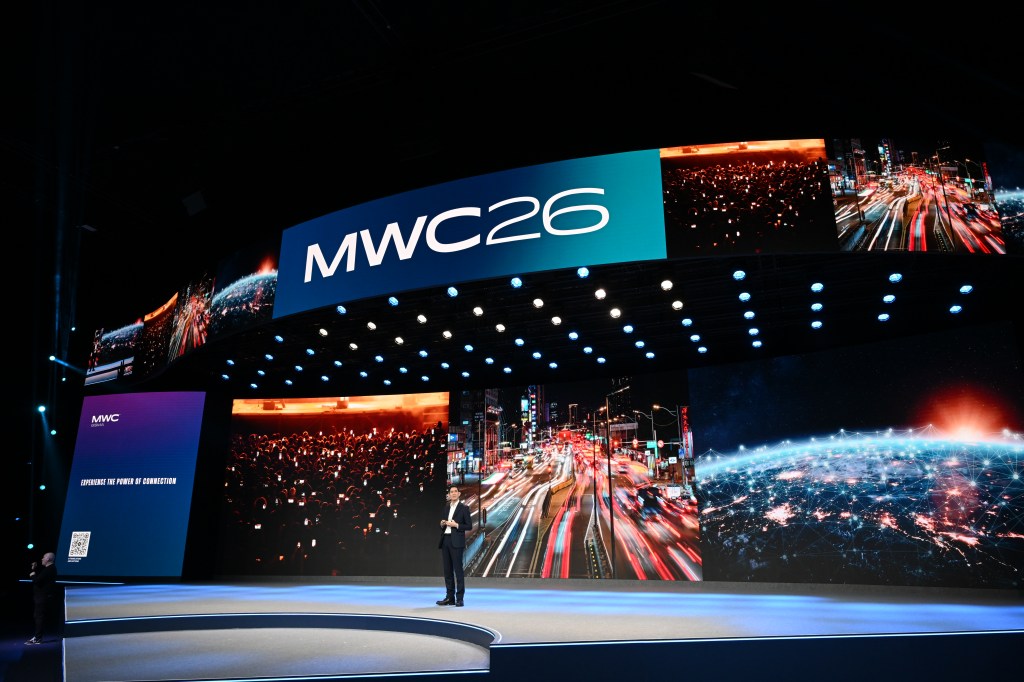
MWC Barcelona 2026: AI Moves into the Pipe
The GSMA’s theme this year was “The IQ Era.” For once, the branding matched the floor. MWC 2026 wasn’t about device launches. It was about AI embedding into network infrastructure itself.
The most consequential announcements came from operators, not handset makers. The GSMA launched Open Telco AI, a collective industry effort to weave AI into carrier operations. Qualcomm’s new X105 modem embeds an AI processor directly in the chip, a 6G stepping stone that will shape OEM roadmaps for 2027 devices. Deutsche Telekom debuted an AI call assistant that lives in the network, not in an app. And AWS committed €33 billion to Spain, explicitly framing the country as its European AI epicentre.
My PoV: Telecom providers are quietly becoming AI infrastructure providers. When intelligence is embedded at the carrier layer, every device on that network gains capability it didn’t ship with. Your connectivity strategy and your AI strategy are now the same strategy. Most enterprise roadmaps haven’t caught up to that yet.
Apple’s Big Week: Intelligence at $599
Apple launched seven products in three days. Two stand out.
The iPhone 17e brings the A19 chip, 256GB base storage, and full Apple Intelligence to the $599 price point. The story isn’t the device, it’s the distribution. Apple’s AI stack just reached a much larger addressable base.
The MacBook Neo is more significant. A $599 laptop running an A18 Pro chip, the same silicon as the iPhone 16 Pro, with Apple claiming 3x faster on-device AI performance than comparable Intel machines. It is the first Mac powered by an iPhone chip. The architectural wall between Apple’s phone and laptop lines has come down.
My PoV: This week wasn’t about hardware. It was about what happens when AI-capable silicon reaches commodity pricing across every form factor. Combined with agentic coding tools like Claude Code, the barrier to building functional software has effectively hit zero. The question for technology leaders is no longer which devices to provision, it’s how to govern what a workforce of accidental developers builds with them.
The Anthropic Labour Report: The Gap Between Fear and Fact
Anthropic published “Labour Market Impacts of AI: A New Measure and Early Evidence” this week. It is worth reading carefully.
The paper introduces “observed exposure”, measuring what AI is actually being used for at work, not what it theoretically could do. The gap is stark: Computer and Math roles have 94% theoretical AI exposure but only 33% actual usage coverage today. Legal sits at 80% theoretical, 15% actual. The wave is real. The timeline is slower than the headlines suggest.
Computer programmers top the “actually happening now” list at 75% task coverage, followed by customer service at 70% and data entry at 67%. Yet unemployment in exposed occupations has not meaningfully risen since ChatGPT’s 2022 launch. The one signal worth watching: hiring of workers aged 22–25 into exposed roles has quietly slowed.
My PoV: That entry-level hiring signal matters more than aggregate unemployment data. The mid-level talent of 2028 is being shaped right now. Workers who are not hired into exposed roles today don’t disappear, they redirect. But the pipeline compresses. For enterprise leaders, the implication is concrete: talent acquisition strategies in software development, customer operations, and financial analysis need to account for a structurally thinner entry cohort arriving in the next two to three years.
My Takeaway This Weekend
MWC confirmed AI is now infrastructure, in the network, not on top of it. Apple confirmed AI silicon is now a commodity, at $599 in both your pocket and on your desk. Anthropic confirmed the labour disruption is real but the clock is slower than feared, for now.
The word “yet” is doing heavy lifting across all three stories. The period between “not yet” and “already happened” is consistently shorter than organisations plan for. The question is not whether these shifts are coming. It is whether your architecture, your talent pipeline, and your operating model are being built for the right horizon.
 Amitabh Apte