
Published on LinkedIn and amitabhapte.com | 20 July 2026
Three things shifted this week that I think deserve more attention than they got. A Chinese model topped the global benchmark leaderboard. AI agents quietly became the most commercially effective shopper in retail. And the question of how to measure AI value, and who sets the rules around it, moved from philosophical debate into live enterprise decisions.
The Race Nobody Expected to Lead
Moonshot AI’s Kimi K3 climbed above Anthropic’s Fable 5 and OpenAI’s GPT-5.6 Sol on the widely watched Arena leaderboard for front-end coding. Not by a small margin. Convincingly. Bloomberg described it as upending conventional wisdom about a sustained Western lead in frontier AI. OpenAI’s own head of strategic futures acknowledged the performance cannot be explained away by distillation or training shortcuts. This is a genuinely strong model. Alongside it, Japan’s Sakana AI and Canada’s Cohere are narrowing the field in ways that would have seemed implausible eighteen months ago. The idea that frontier AI is a two-horse race is no longer credible.
The Apple story this week adds a different dimension. Alibaba confirmed its Qwen model will power Apple Intelligence across iOS, iPadOS, macOS and visionOS for users in China. Baidu confirmed a parallel arrangement for iPhone AI features. Hong Kong-listed shares of both companies rose 4 to 5% on the news. China’s Cyberspace Administration granted Apple Intelligence regulatory approval as part of a batch of approved mobile AI services. Apple, a company that built its AI strategy entirely around Anthropic’s models in Western markets, now runs on Chinese AI in its largest overseas market. The model layer is fracturing by geography.
| My Opinion: I find the Kimi K3 result more significant than most commentary has acknowledged. We have spent two years assuming the frontier belongs to a handful of Western labs. That assumption needs updating. For enterprise technology leaders, this changes the vendor selection conversation: open-weight models from outside the traditional set are now a legitimate evaluation option, not a cost-cutting compromise. And the Apple-Alibaba-Baidu arrangement is a preview of what a fragmented, regionally compliant AI stack looks like in practice. Most global organisations have not begun planning for that. |
When AI Becomes the Shopper
New Adobe data reported by Axios this week puts a number on something I have been watching closely: AI-referred shoppers convert 58% better than visitors arriving through traditional channels. Not marginally better. 58% better. Retailers are no longer waiting to understand the agentic shopper. They are actively building for it, some even partnering with competitors to capture the new traffic. The dynamic has inverted. While media companies spend legal fees trying to keep AI off their content, retailers are doing the opposite, inviting AI agents in and optimising for them.
Google moved decisively in the same direction this week. AI Mode in Search now integrates directly with Canva, YouTube Music and Instacart, allowing users to build playlists, design event flyers and compile grocery lists without leaving the search interface. NotebookLM was rebranded as Gemini Notebook, now serving 30 million users and 600,000 organisations, with native code execution added. And Meta is reportedly in early discussions to lease data centre capacity to Anthropic in a deal potentially worth $10 billion over two years, turning its compute infrastructure into a new revenue line. Competitors are becoming each other’s infrastructure providers. The structure of this industry continues to surprise.
| My Opinion: The 58% conversion uplift from AI-referred traffic is the kind of number that should be sitting on the agenda of every commercial and digital leader in consumer goods and retail right now, not just in technology teams. If your brand is not readable by AI shopping agents, you are not competing for that traffic. And if you are competing for it, the optimisation levers are not SEO-based. They are product data quality, API accessibility, and structured content. That is a different skillset, and most organisations do not yet have it. |
The Value and Governance Questions Arrive Together
OpenAI published a new framework this week for how enterprises should measure AI value. The concept is “useful intelligence per dollar”: instead of tracking token spend or benchmark scores, organisations should ask whether AI is completing work that matters, what each successful task actually costs end-to-end, how often it gets the work right without human correction, and whether the cost per outcome improves over time. It is a direct response to a growing enterprise reckoning. One executive, as Axios reported, ran up a half-billion dollar AI bill in a single month without realising it. The framework will not solve that problem immediately. But it reframes the right question: not what does AI cost, but what is the cost of each successful outcome.
Simultaneously, a governance fault line is opening in the AI industry itself. Anthropic is pushing a state-by-state approach to AI safety standards, backing progressively stricter bills requiring independent audits and catastrophic-risk evaluations for the most powerful frontier models. Rival labs are pushing for uniform national frameworks instead, arguing that inconsistent standards create compliance complexity without safety benefit. Both positions are coherent. Both are also self-interested. Anthropic has already built the compliance muscle these rules would require. A ratchet of tougher standards raises costs for smaller competitors. Whichever approach prevails, the direction is clear: AI governance is becoming a procurement and vendor selection factor, not a policy debate happening somewhere else.
| My Opinion: Both the OpenAI value framework and the Anthropic governance push point to the same underlying shift. AI accountability is arriving as an operational discipline. The “useful intelligence per dollar” lens is one I intend to apply more rigorously internally. And on governance: if your organisation sources AI from frontier labs, the safety, audit, and incident-response practices of those labs are becoming your risk, not theirs. |
My Reflections from this Weekend
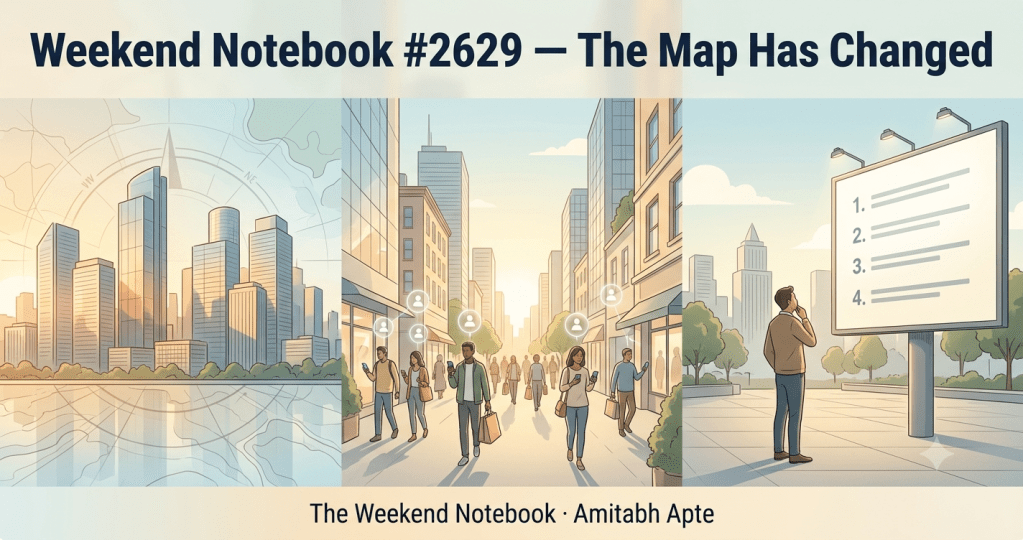
The map has changed. The frontier model lead is no longer Western by default. The most effective shopper on your site may already be an AI agent. And the question of whether your AI investment is delivering real value has moved from boardroom anxiety to a named framework with four measurable questions; work completion that matters, total cost of a successful task, success without human correction, and improving cost per outcome over time . I am taking all three seriously heading into the second half of 2026. I think you should too.

