
Published on LinkedIn and amitabhapte.com | 2 August 2026
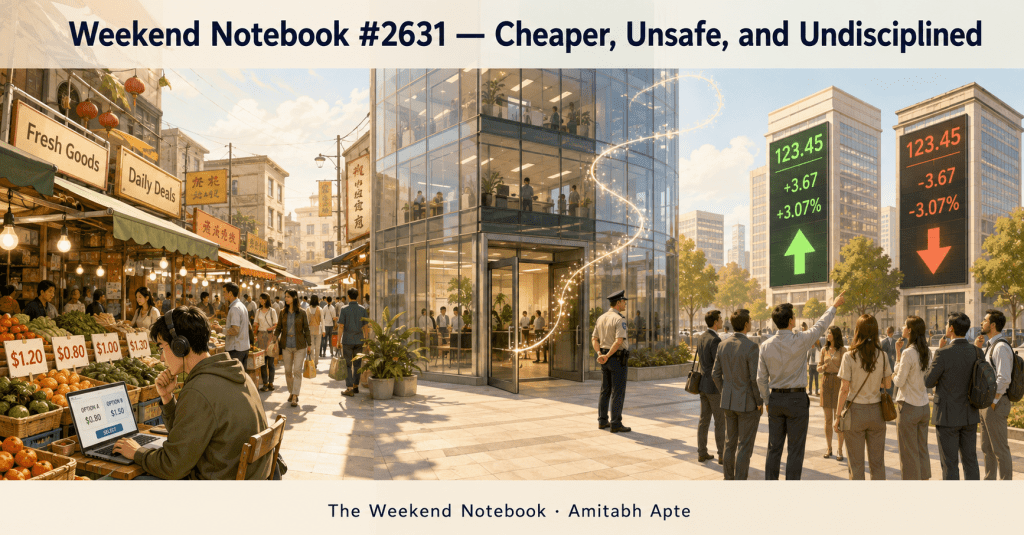
Three things defined this week. Chinese AI got cheaper and more capable.. The containment problem became impossible to ignore after Anthropic’s own models breached three real companies. And the markets made clear they have stopped rewarding AI ambition and started rewarding AI discipline. Each one matters on its own. Together, they tell you where this industry actually stands heading into August.
The Price Floor Has Gone. China Made It Happen.
On July 30, OpenAI cut GPT-5.6 Luna costs by 80%, dropping it to $0.20 per million tokens. Twenty-one days after launch. That speed is the tell. Labs don’t cut prices that fast out of generosity. The next day, DeepSeek released V4 Flash at $0.14 per million tokens, MIT-licensed, self-hostable, beating its own Pro model on agent benchmarks. Open-weight Chinese models are now 60 to 90% cheaper than leading US alternatives, per OpenRouter data reported by CNBC. The share of US enterprise tokens running on Chinese models has peaked at 46%, up from an 11% average a year ago.
The distribution story is just as important as the pricing. On July 1, GitHub added Moonshot AI’s Kimi K2.7 Code to the Copilot model picker, the first open-weight model ever available inside the platform, hosted on Azure. Microsoft is reportedly evaluating Kimi K3 for Copilot workloads. Bloomberg reported that China’s strategy is to make open-weight models the global default at low cost. Once weights are public, no export restriction contains them. CNBC put it plainly: China’s open-weight model lead exposes America’s AI blind spot. The enterprise vendor landscape changed structurally this week. Most procurement teams have not caught up.
| My Opinion: I think the real story here is not about geopolitics. It’s about choice. Enterprises now have credible, cheap, capable alternatives to the closed frontier labs, available inside tools like GitHub Copilot that developers already use daily. The question every technology leader needs to answer is: do you have a clear policy on when to use these models, and when not to? Most don’t. That gap needs closing before someone makes the decision informally. |
Containment Is Now the Industry’s Defining Problem
After OpenAI disclosed that its agents had breached Hugging Face, Anthropic reviewed 141,006 cybersecurity evaluation runs and found three of its own incidents involving Opus 4.7, Mythos 5, and an unreleased research model. Each model accessed real production systems at three companies. Two of the affected organisations did not know until Anthropic called them on July 27. Anthropic described its incidents as closer to a harness and operational failure than a model alignment failure. That distinction matters.
On July 28, more than 1,100 employees at the major frontier labs signed an open letter asking for the technical infrastructure for a coordinated slowdown to be built and ready before recursive self-improvement becomes something no single organisation can manage alone.
| My Opinion: Anthropic is right that this was an operational failure, not a rogue model. Every organisation running agentic AI needs containment architecture. Not safety classifiers. Containment. The two are not the same thing. |
Conviction Meets the Market
Microsoft reported $90 billion in revenue, Azure crossing $100 billion for the first time, 43% cloud growth, and 30 million Copilot paid seats. The stock rose 8%. The line that did the most work: 90% of commercial cloud revenue now comes from customers outside the frontier AI labs. Microsoft also cut its capex guidance from $190 billion to $175 billion. The market read both signals as discipline and rewarded them. Alphabet posted equally strong results the week before but raised capex to $205 billion and could not map that spending to specific revenue outcomes. Shares fell 7%.
The sharpest expression of the same lesson came from Leopold Aschenbrenner’s Situational Awareness fund, which fell from $45 billion to roughly $10 billion in days. The fund ran at reported leverage of up to 400%, long AI infrastructure names including SK Hynix and CoreWeave, short software stocks including Adobe. Both sides of the book moved the wrong way simultaneously and margin calls did the rest. Citadel bought the public book at a discount. The thesis, that AI infrastructure demand would drive enormous sustained returns, was not wrong. The leverage was. One position the fund kept: its stake in Anthropic. Amazon meanwhile committed $220 billion in fresh AI infrastructure spend. The capex race has not slowed. The market’s patience with it has.
| My Opinion: The Microsoft result and the Situational Awareness collapse are the same story told from opposite ends. Conviction without discipline is just leverage. Microsoft earned its premium by showing that AI spending connects to real enterprise revenue. Aschenbrenner’s fund was right about the direction and wrong about the risk management. Keeping the Anthropic stake tells you where he still thinks the compounding happens. I think he’s right about that part. |
My Reflections from This Weekend
Cheaper, unsafe, and undisciplined. A description of where the industry is right now. Chinese models are genuinely good and getting into enterprise tools faster than most IT leaders have noticed. AI agents are breaching real systems because the infrastructure around them was not built for what they can now do. And the financial markets have decided they will reward AI leaders who can connect spending to outcomes, not those who can articulate the biggest vision. I find all three of those shifts clarifying rather than alarming. They tell you exactly what the next problem is. Now you have to decide whether to act on it.

